

DMT crystals commonly refers to crystalline N,N-dimethyltryptamine (DMT), a powerful psychedelic compound belonging to the tryptamine family. DMT occurs naturally in a number of plants and has also been produced synthetically. In its purified form, DMT can appear as white, off-white, yellowish, or slightly orange crystalline material, depending on purity and residual compounds.
DMT is notable for producing an exceptionally intense alteration of perception and consciousness. Unlike many longer-lasting psychedelics, inhaled DMT experiences are generally characterized by a rapid onset and comparatively short overall duration. The experience can involve vivid visual phenomena, significant changes in the perception of space and time, unusual thought patterns, and a profound alteration of one’s sense of self or surroundings.
What Are DMT Crystals?
The term DMT crystals describes the physical form of DMT rather than a separate type of psychedelic. DMT can be encountered in different physical presentations, but crystalline material generally refers to relatively purified solid DMT.
Appearance alone, however, cannot establish identity or purity. Crystalline substances obtained outside regulated laboratory environments may contain other compounds, contaminants, residual solvents, or entirely different substances. Laboratory analytical testing is required to establish chemical identity and composition reliably.
Effects of DMT
DMT is considered a very potent psychedelic. Its effects can begin rapidly when it is administered through methods that allow the compound to reach the bloodstream quickly. Reported experiences can include intense geometric or colorful visual effects, distorted perceptions of the environment, altered awareness of time, rapidly changing thoughts, and feelings of separation from ordinary reality.
Some people report experiences they interpret as spiritual, mystical, or involving apparently autonomous entities. These descriptions are subjective experiences rather than established evidence that such entities or external realms objectively exist.
The intensity of a DMT experience can make it difficult for a person to understand or respond normally to their surroundings. Anxiety, fear, confusion, disorientation, nausea, increased heart rate, and changes in blood pressure can also occur.
Duration
One characteristic that distinguishes DMT from many other psychedelics is its relatively rapid time course when inhaled. Effects may become noticeable within a very short period and can reach peak intensity quickly. Although the most intense portion may be relatively brief, residual perceptual or psychological effects can last longer.
Duration varies according to the form of DMT, route of administration, individual physiology, other substances involved, and other factors.
DMT Crystals and DMT Pens
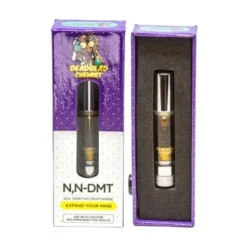
DMT crystals and DMT pens are not necessarily different substances. A DMT pen is a delivery device that may contain a DMT-containing formulation, whereas “DMT crystals” generally describes the crystalline material itself.
Because products sold as DMT can vary substantially in composition, labeling such as “DMT,” “crystals,” or “pen” does not by itself guarantee what a product contains. Unregulated products may have unknown concentrations or contaminants.
Health and Safety Considerations
DMT can produce an extremely intense psychological experience. A person may experience overwhelming fear, panic, confusion, or temporary difficulty distinguishing ordinary surroundings from psychedelic perceptions. People with certain psychiatric vulnerabilities may face additional risks from psychedelic substances.
DMT can also interact with other substances and medications. Particular caution is warranted with substances that affect serotonin or monoamine metabolism, including MAO-inhibiting substances, because potentially dangerous interactions can occur. Combining psychoactive substances can make effects less predictable.
A person experiencing severe agitation, loss of consciousness, seizures, chest pain, difficulty breathing, dangerously abnormal behavior, or another medical emergency should receive urgent medical attention.
Legal Status
The legal status of DMT differs considerably between jurisdictions. In many countries, DMT is a controlled substance, and possession, production, distribution, importation, or sale may be prohibited or subject to strict licensing requirements. Laws can also differ between the substance itself and plants that naturally contain DMT.
Consequently, anyone researching DMT should check the legislation applicable to their specific country rather than relying on descriptions from online marketplaces or social-media posts.
DMT Research
DMT has attracted scientific interest because of its unusual psychedelic effects and its potential relevance to research into consciousness, perception, and psychiatric disorders. Researchers have investigated DMT and related psychedelics under controlled conditions, but research findings should not be interpreted as evidence that recreational or unregulated use is safe or medically effective.
In summary, DMT crystals are a crystalline form of N,N-dimethyltryptamine, a highly potent psychedelic compound. They are associated with rapid and intense changes in perception and consciousness, while their appearance cannot reliably establish purity or identity. Because DMT can carry significant psychological, physiological, interaction, and legal risks, information about the substance should be approached from a harm-reduction and scientific perspective rather than assuming that an unregulated product is accurately labeled or safe.
| Select Size | 1g, 5g, 10g |
|---|
Be the first to review “DMT Crystals”
Related products
Psychedelics
Psychedelics
Psychedelics

Reviews
There are no reviews yet.